For the OpenAI Wine Experience, the goal was to create a personalised takeaway where guests could generate their own custom wine label in real time. The experience needed to feel premium and visually aligned with the OpenAI brand, while operating quickly enough to produce hundreds of labels during a short event window.
[ CaSE StuDy ]
Wine Experience
OpenAI
//
2025
[
Project planning
]
Project considerations
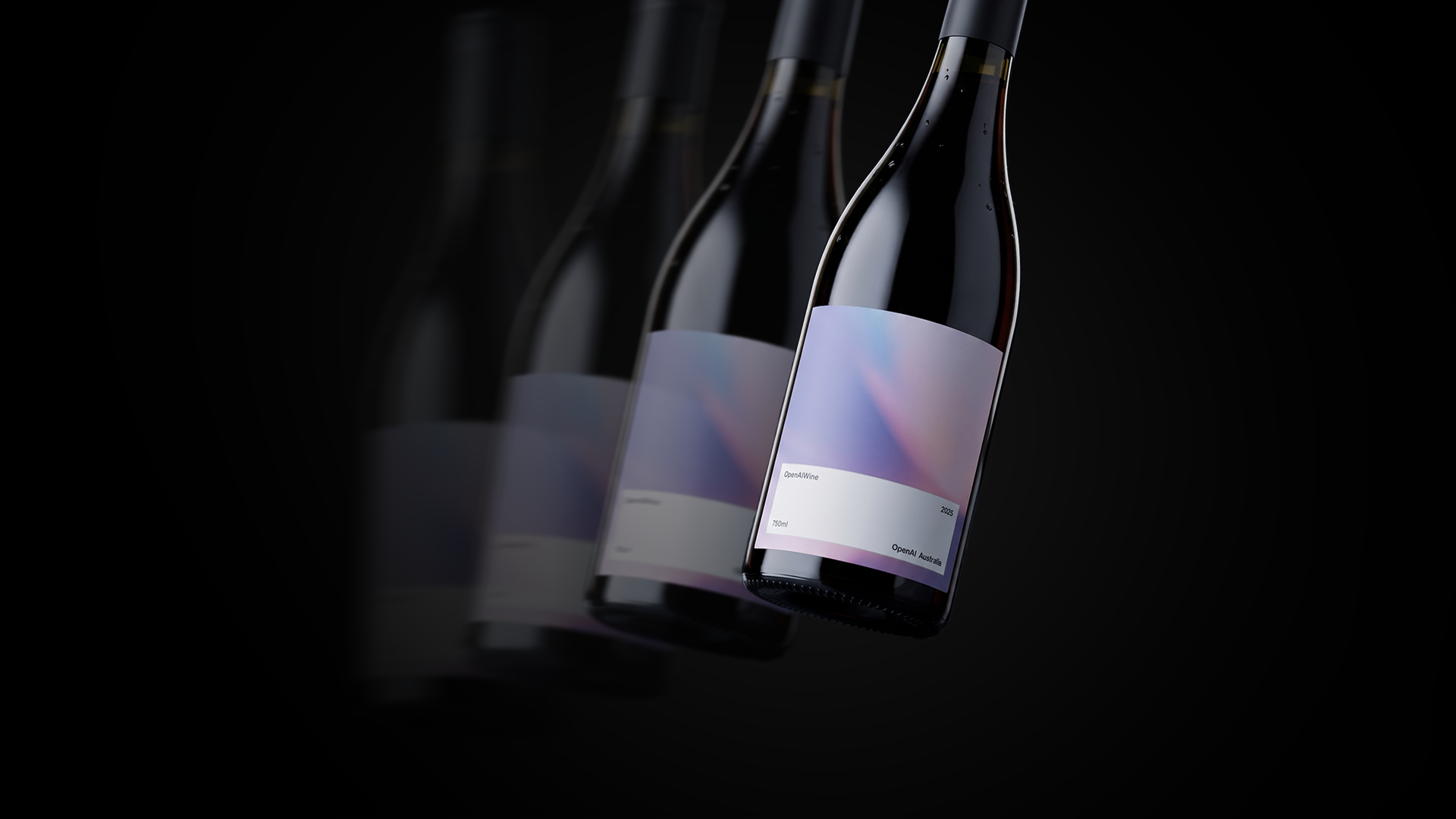
Guests used a custom iPad app to enter a few details about themselves, generating a unique wine label design inspired by the shifting gradient animation seen during ChatGPT image generation.
The aesthetic captured the feeling of AI creation in motion while still maintaining the structure of a premium wine label. Once generated, the label was printed on matte vinyl, precision-cut using an industrial cutter and applied to a bottle by our team. The finished bottle was then presented to the guest as a personalised keepsake to take home from the event.
Extremely short ~1.5 week approval window before activation
Labels could not be pre-cut due to late design confirmation
Requirement to produce ~300 personalised labels within a 2-hour event window
Designing a production workflow fast enough for live personalisation
Ensuring labels could be applied consistently and quickly to wine bottles
Selecting staff with the manual dexterity required for rapid label application
Building a reliable print-and-cut workflow for vinyl labels
Bringing sufficient contingency materials for unexpected demand
[
Product scope
]
Solutions used
PicAIsso
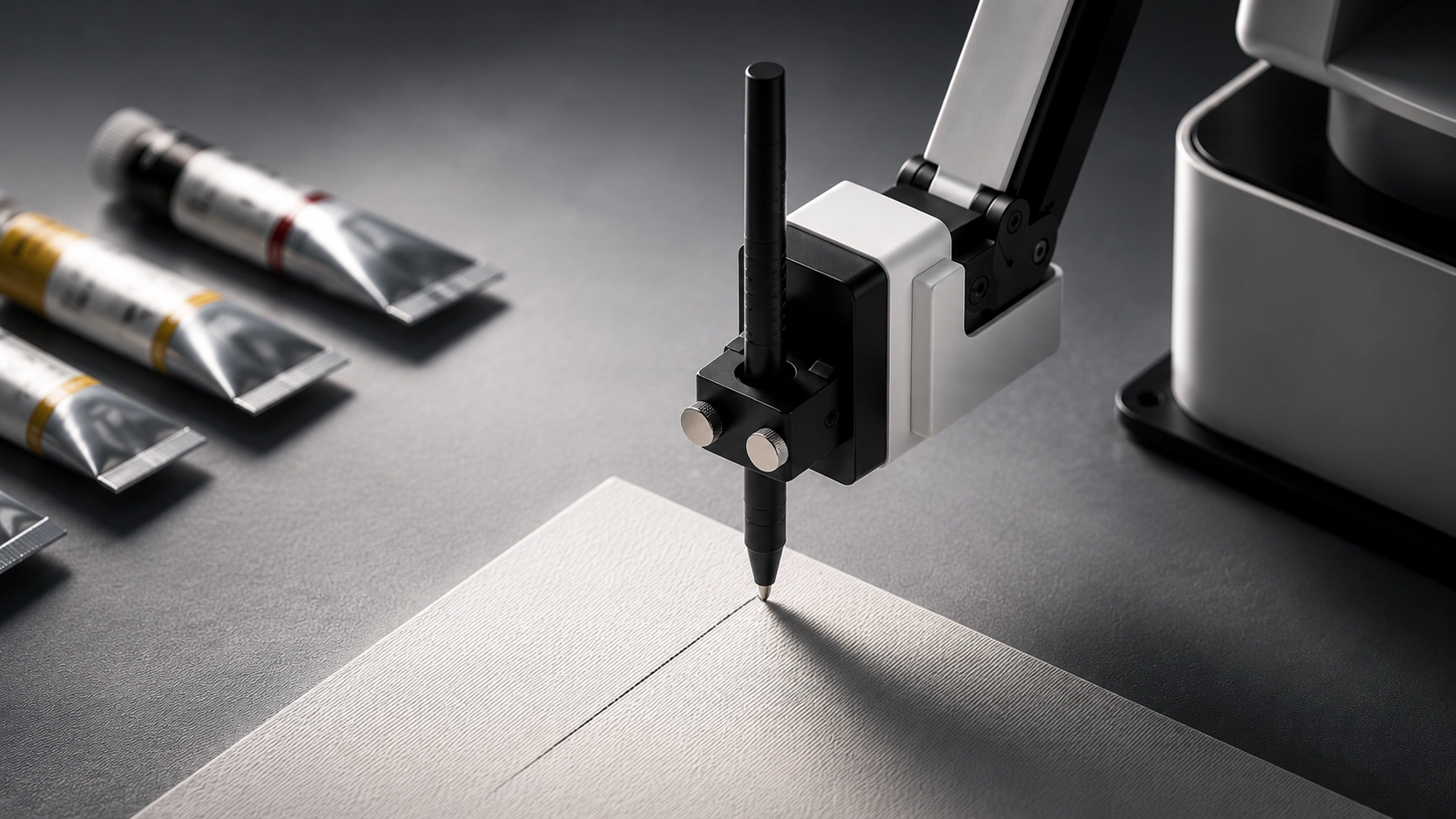
A robotic artist transforms guest portraits into live-drawn artwork. After a quick photo, an AI-powered system analyses the image and begins sketching it line-by-line in real time. Turning the drawing process into the show, PicAIsso creates a moment that draws a crowd and delivers a personalised keepsake.
Development

Phase 1:
Label Design & Rapid Prototyping
Once the label shape and visual direction were approved, we immediately began testing the print-and-cut workflow using our industrial vinyl sheet cutter. Sample labels were printed with registration marks and cut to confirm sizing, alignment and cutting accuracy.
As approval came very close to the event date, this prototyping stage had to happen quickly to ensure the system could reliably produce labels before the activation.
Phase 2:
Print System Testing
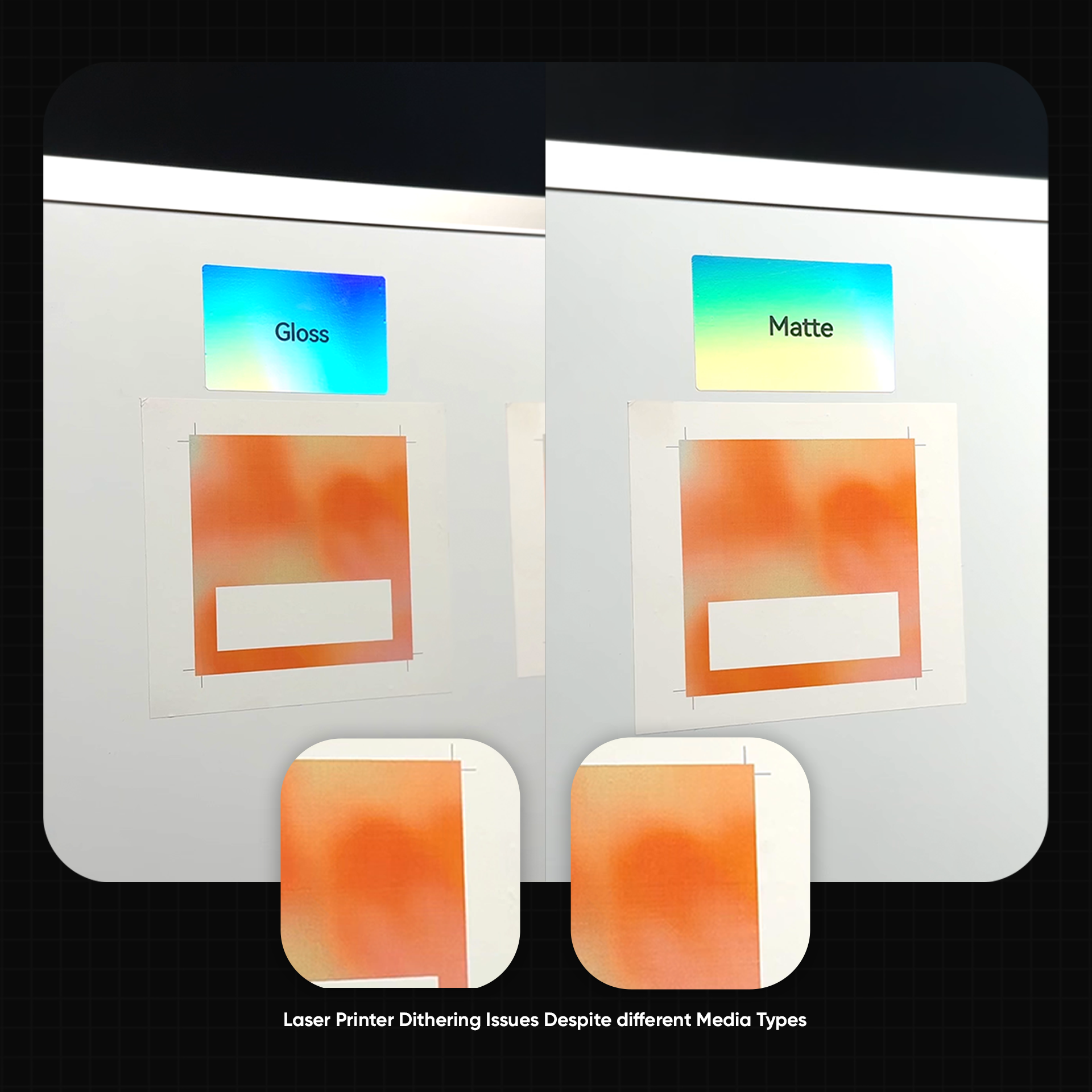
To achieve the throughput required for approximately 300 labels within a 2-hour window, we initially tested high-speed vinyl-compatible laser printers.
While these printers offered the speed we needed, testing revealed 2 unexpected problems. Gradient-heavy artwork produced visible dithering, and the heat used to fuse toner caused the vinyl sheets to curl, preventing the cutter from feeding them reliably.
Phase 3:
Workflow & Application Optimisation
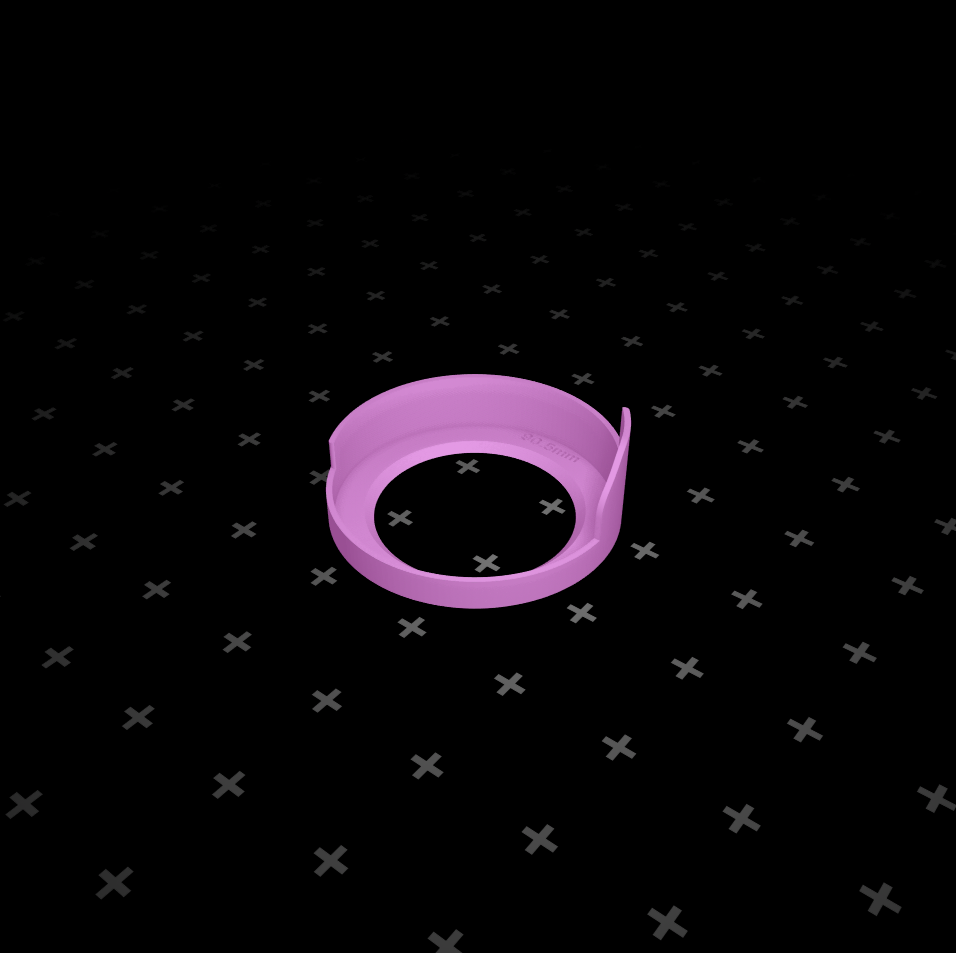
To resolve these issues, we transitioned to an inkjet printing workflow, which produced significantly smoother gradients and eliminated the curling caused by laser heat.
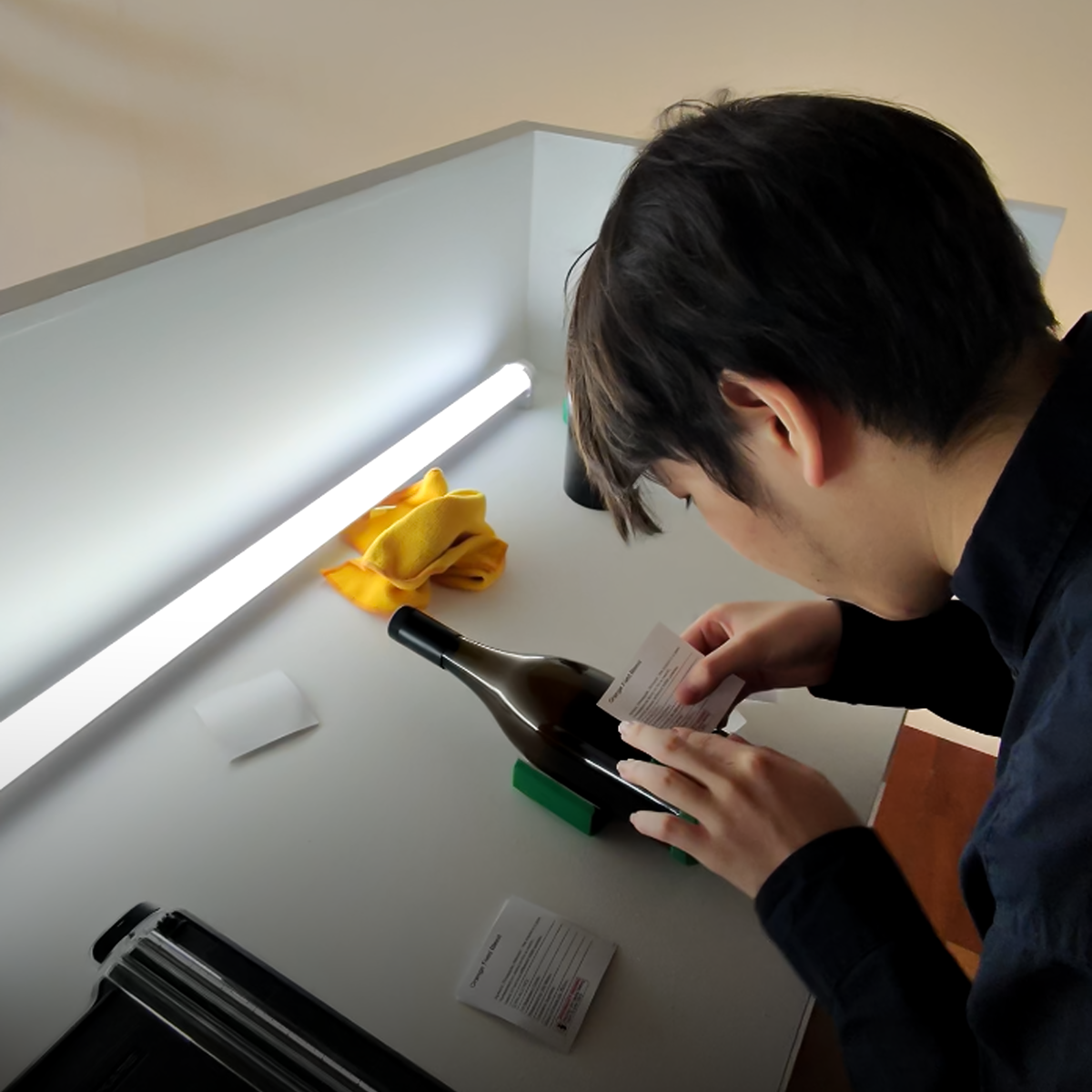
At the same time, we focused on improving the speed of label application. We designed and 3D printed a custom bottle labelling template that fit perfectly around the wine bottles, allowing labels to be positioned consistently and applied in seconds.
Phase 4:
Live Production & On-Site Adaptation
Before the event, the team conducted practice runs using the actual bottles and labels so staff could become comfortable with the application process and optimise their speed. This rehearsal stage ensured labels could be applied quickly and consistently once guests began generating them.
As part of our contingency planning, we also brought approximately 50% additional blank label stock. This proved useful even before the activation began, when the client requested labels for around 200 display bottles used throughout the venue. The extra materials allowed us to produce these demonstration labels without impacting the supply needed for personalised guest bottles.
Phase 1:
Label Design & Rapid Prototyping
[ Phase 1 ]
Label Design & Rapid Prototyping
Once the label shape and visual direction were approved, we immediately began testing the print-and-cut workflow using our industrial vinyl sheet cutter. Sample labels were printed with registration marks and cut to confirm sizing, alignment and cutting accuracy.
As approval came very close to the event date, this prototyping stage had to happen quickly to ensure the system could reliably produce labels before the activation.
[ Phase 2 ]
Print System Testing
Phase 2:
Print System Testing
To achieve the throughput required for approximately 300 labels within a 2-hour window, we initially tested high-speed vinyl-compatible laser printers.
While these printers offered the speed we needed, testing revealed 2 unexpected problems. Gradient-heavy artwork produced visible dithering, and the heat used to fuse toner caused the vinyl sheets to curl, preventing the cutter from feeding them reliably.
[ Phase 3 ]
Workflow & Application Optimisation
Phase 3:
Workflow & Application Optimisation
To resolve these issues, we transitioned to an inkjet printing workflow, which produced significantly smoother gradients and eliminated the curling caused by laser heat.
At the same time, we focused on improving the speed of label application. We designed and 3D printed a custom bottle labelling template that fit perfectly around the wine bottles, allowing labels to be positioned consistently and applied in seconds.
[ Phase 4 ]
Live Production & On-Site Adaptation
Phase 4:
Live Production & On-Site Adaptation
Before the event, the team conducted practice runs using the actual bottles and labels so staff could become comfortable with the application process and optimise their speed. This rehearsal stage ensured labels could be applied quickly and consistently once guests began generating them.
As part of our contingency planning, we also brought approximately 50% additional blank label stock. This proved useful even before the activation began, when the client requested labels for around 200 display bottles used throughout the venue. The extra materials allowed us to produce these demonstration labels without impacting the supply needed for personalised guest bottles.
Development
Phase 1:
Label Design & Rapid Prototyping
[ Phase 1 ]
Label Design & Rapid Prototyping
Once the label shape and visual direction were approved, we immediately began testing the print-and-cut workflow using our industrial vinyl sheet cutter. Sample labels were printed with registration marks and cut to confirm sizing, alignment and cutting accuracy.
As approval came very close to the event date, this prototyping stage had to happen quickly to ensure the system could reliably produce labels before the activation.
Phase 1:
Label Design & Rapid Prototyping
[ Phase 2 ]
Print System Testing
To achieve the throughput required for approximately 300 labels within a 2-hour window, we initially tested high-speed vinyl-compatible laser printers.
While these printers offered the speed we needed, testing revealed 2 unexpected problems. Gradient-heavy artwork produced visible dithering, and the heat used to fuse toner caused the vinyl sheets to curl, preventing the cutter from feeding them reliably.
Phase 1:
Label Design & Rapid Prototyping
[ Phase 3 ]
Workflow & Application Optimisation
To resolve these issues, we transitioned to an inkjet printing workflow, which produced significantly smoother gradients and eliminated the curling caused by laser heat.
At the same time, we focused on improving the speed of label application. We designed and 3D printed a custom bottle labelling template that fit perfectly around the wine bottles, allowing labels to be positioned consistently and applied in seconds.
Phase 1:
Label Design & Rapid Prototyping
[ Phase 4 ]
Live Production & On-Site Adaptation
Before the event, the team conducted practice runs using the actual bottles and labels so staff could become comfortable with the application process and optimise their speed. This rehearsal stage ensured labels could be applied quickly and consistently once guests began generating them.
As part of our contingency planning, we also brought approximately 50% additional blank label stock. This proved useful even before the activation began, when the client requested labels for around 200 display bottles used throughout the venue. The extra materials allowed us to produce these demonstration labels without impacting the supply needed for personalised guest bottles.
Development
[
Phase 2
]
Print System Testing
To achieve the throughput required for approximately 300 labels within a 2-hour window, we initially tested high-speed vinyl-compatible laser printers.
While these printers offered the speed we needed, testing revealed 2 unexpected problems. Gradient-heavy artwork produced visible dithering, and the heat used to fuse toner caused the vinyl sheets to curl, preventing the cutter from feeding them reliably.
[
Phase 4
]
Live Production & On-Site Adaptation
Before the event, the team conducted practice runs using the actual bottles and labels so staff could become comfortable with the application process and optimise their speed. This rehearsal stage ensured labels could be applied quickly and consistently once guests began generating them.
As part of our contingency planning, we also brought approximately 50% additional blank label stock. This proved useful even before the activation began, when the client requested labels for around 200 display bottles used throughout the venue. The extra materials allowed us to produce these demonstration labels without impacting the supply needed for personalised guest bottles.
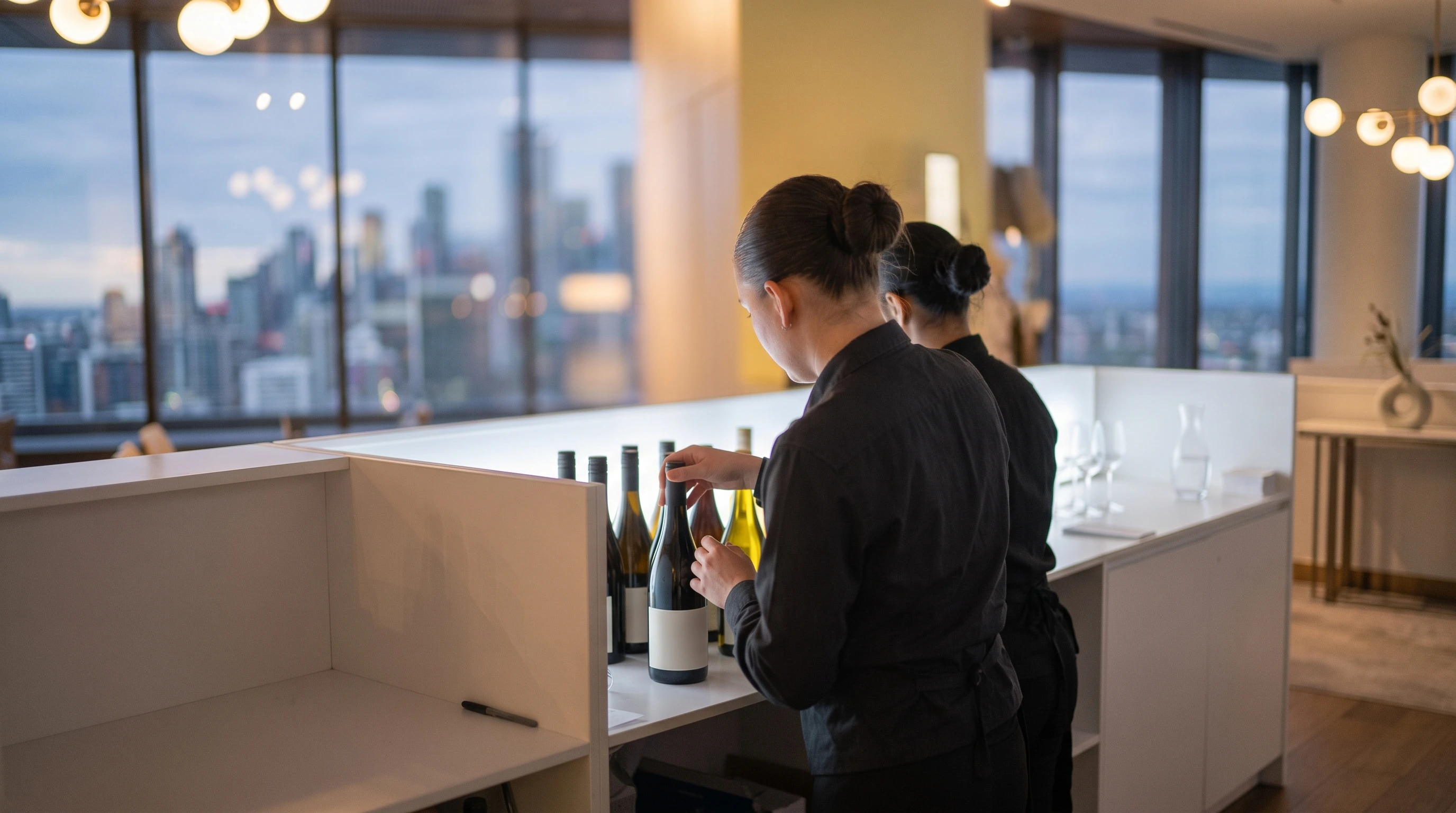
Over 300 personalised bottles produced.
8 iPad stations driving 300+ labels in the first hour alone. Printed, cut and applied on-site under real-world pressure.
[
End result
]
Project outcome
During the activation, guests generated personalised wine labels through the custom interface, which were then printed, cut and applied by our team before the bottles were presented as a takeaway.
Approximately 300 personalised bottles were produced during the event, creating memorable keepsakes for guests while demonstrating the potential of real-time personalised packaging. The operational learnings from this activation ultimately helped refine and formalise the concept into what would later become our InstaSticker system.
What appeared simple on the surface quickly became a highly technical challenge - with final approvals landing just 1.5 weeks before launch.
With no time for pre-production, SNAP LAB engineered a rapid, on-demand workflow capable of producing hundreds of custom labels within hours. Extensive testing across both laser and inkjet systems allowed us to balance speed, material constraints and finish - ultimately landing on a solution that delivered both reliability and high-quality output under pressure.
With 8 iPad stations generating demand, the team produced 300+ labels within the first hour, maintaining flow and keeping the experience responsive during peak traffic.
When additional, non-custom labels were requested on-site, built-in contingency planning ensured there was no disruption - with surplus stock ready to deploy immediately.
Beyond delivery, the project became a valuable R&D milestone. Insights from the activation have directly informed the evolution of SNAP LAB's InstaSticker system - refining how we approach speed, scalability and production at live events.
The result: a technically demanding activation, executed seamlessly and built to perform under real-world pressure.